
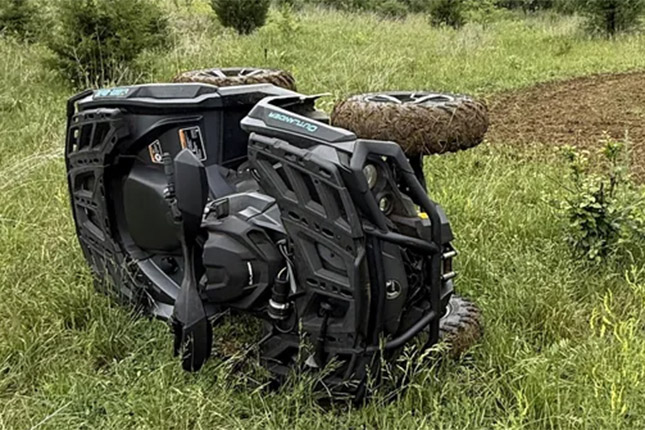
Compared to a car, yes. A side by side is tall, narrow and light, with a center of gravity well above the axle line. That combination rolls.
Compared to an ATV, no. The roll cage, the seat belts and the wider track make a UTV rollover survivable in a way a quad rollover often is not.
The honest framing is that UTVs roll more easily than most new owners expect and hurt people less often than the rollover rate suggests, because the cage does its job.
When rollovers actually happen
Almost never on a straight, flat trail. The pattern is consistent.
Off-camber slopes. A side hill that feels fine at walking pace becomes a rollover at speed, because weight transfers to the downhill wheels.
Sharp turns at speed on hardpack. Grip is the enemy here. On loose surface the tires slide and bleed off energy. On grippy hardpack they hook up and the machine tips instead.
Ruts and holes catching a wheel. A downhill wheel dropping into a rut is the most common trail rollover.
Oversized tires without a lift. Taller tires raise the center of gravity. Raising it further with a lift compounds the problem. This is the trade nobody mentions when they sell you 32s.
What actually reduces the risk
Belts on, doors closed, arms inside. Most UTV injuries are arms and hands, not heads, and they happen when a rider braces against the ground during a roll.
Slow down on side hills. Point the machine straight up or straight down a slope rather than crossing it where you have a choice.
Lower tire pressure gives you a wider contact patch and more warning before the machine breaks loose. Not a fix, but it changes how the machine talks to you.
Passengers change the math. A four-seat machine loaded with people sitting high rolls more easily than the same machine empty.
If it does go over
Do not put a hand out. Hold the wheel or the grab bar, stay inside the cage, and let the machine finish moving before unbuckling.
Related guides
- Do you balance UTV tires
- The best UTV tires
- The ultimate guide to buying a used UTV for beginners