
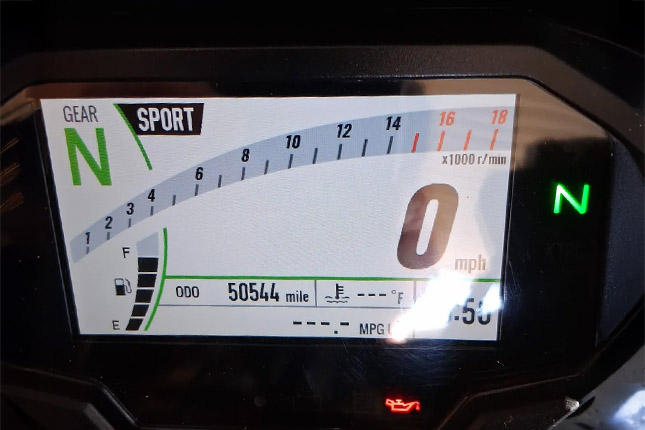
Under 500 hours is low. Between 500 and 1,500 is normal for a machine that gets used. Over 2,000 is high and needs a hard look before money changes hands.
Those brackets are useful right up until you meet a 300 hour machine that has been beaten to death and a 1,800 hour machine that has been maintained like an aircraft. Hours tell you how much, not how.
What an hour actually represents
A UTV hour meter counts engine run time, including idling. A farm machine that idles at a gate for twenty minutes a day accumulates hours doing nothing. A sport machine at wide-open throttle for an hour has done vastly more damage in the same reading.
Rough conversion for a trail machine, one hour is roughly 20 to 25 miles. It is a bad conversion and everybody uses it anyway.
What to check instead of the number
The belt. Pull the cover. A glazed, cracked or dusty belt housing tells you more about the previous owner than the hour meter does. Belt condition is the fastest read on maintenance habits.
Service records. Oil changes at interval, belt changes documented, valve adjustments on machines that need them.
Play in the suspension. Grab a wheel at 12 and 6 and rock it. Movement means bearings or ball joints.
The A-arms and skid plate. Deep gouges and bent tabs say how the machine was ridden, which the hour meter cannot.
Where the money starts going
Most machines want real attention somewhere between 1,000 and 1,500 hours. Suspension bushings, wheel bearings, axles and the clutch assembly are the usual list. None of it is catastrophic and all of it costs money.
Engines in the big-four machines routinely pass 3,000 hours when maintained. The engine is rarely what kills a UTV. Neglect and deferred maintenance are.
Related guides
- UTV value guide
- The ultimate guide to buying a used UTV for beginners
- What is the typical life expectancy of a Polaris RZR 1000 engine
- How long do Polaris RZR drive belts last