Tag: utv maintenance

  • How Long Can You Drive on Unbalanced UTV Tires?

    How Long Can You Drive on Unbalanced UTV Tires?

    Short answer, longer than you should. A UTV will run on unbalanced tires for hundreds of miles without stranding you. What it does in those hundreds of miles is the problem.

    What unbalanced actually means

    A tire and wheel assembly is never perfectly even. A heavy spot forces the assembly to wobble instead of spin true, and the force grows with the square of speed. At 15 mph on a trail you will not feel it. At 45 on a gravel road you will feel it in the steering wheel and the seat.

    Most UTV owners never balance their tires at all, which is why the symptom gets mistaken for normal.

    The damage, in the order it shows up

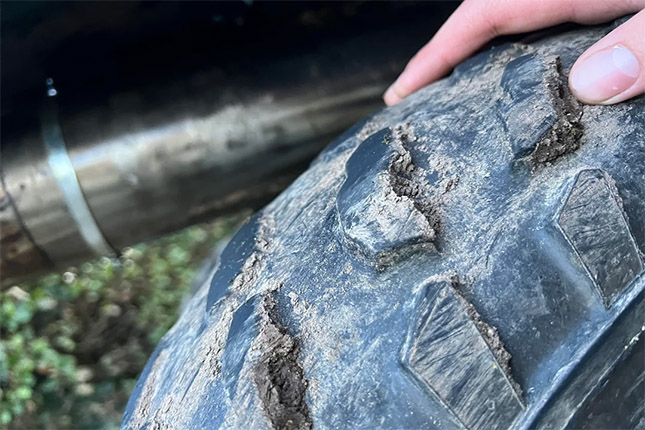
    Cupping on the tread. The tire bounces microscopically as it rotates and wears in scalloped patches. Once cupping starts, balancing will not undo it. You have shortened the life of a tire you paid for.

    Wheel bearings. The wobble is a repeated side load the bearing was not designed for. Bearings are cheap. The labor is not.

    Tie rod ends and ball joints. Vibration works fasteners loose over time and puts play into steering components that should be tight.

    Your hands. Vibration fatigue on a long ride is real and it is the reason you stop noticing the vibration at all, which is how it goes unfixed.

    How to tell

    Get the machine to 40 mph on a smooth surface, if you have somewhere legal to do that.

    Vibration in the steering wheel usually means a front tire. Vibration you feel through the seat usually means a rear. A shake that changes with braking is a different problem, that is a rotor, not a balance issue.

    What to do about it

    Any tire shop can balance UTV wheels. Bring the wheels off the machine and it costs very little.

    If you run heavy mud tires, ask about a balancing bead kit rather than stick-on weights. Beads redistribute themselves as the tire spins and they survive the kind of impact that knocks a weight off a rim.

    Check for packed mud first. A pound of dried mud inside a rim will unbalance a wheel just as effectively as a manufacturing defect, and it costs nothing to fix.

    Related guides

    • Do you balance UTV tires
    • Why are UTV tires smaller in the front
    • The best UTV tires
    • Choosing the right ATV tire pressure for different terrains
  • How Many Hours Are a Lot on a UTV?

    How Many Hours Are a Lot on a UTV?

    Under 500 hours is low. Between 500 and 1,500 is normal for a machine that gets used. Over 2,000 is high and needs a hard look before money changes hands.

    Those brackets are useful right up until you meet a 300 hour machine that has been beaten to death and a 1,800 hour machine that has been maintained like an aircraft. Hours tell you how much, not how.

    What an hour actually represents

    A UTV hour meter counts engine run time, including idling. A farm machine that idles at a gate for twenty minutes a day accumulates hours doing nothing. A sport machine at wide-open throttle for an hour has done vastly more damage in the same reading.

    Rough conversion for a trail machine, one hour is roughly 20 to 25 miles. It is a bad conversion and everybody uses it anyway.

    What to check instead of the number

    The belt. Pull the cover. A glazed, cracked or dusty belt housing tells you more about the previous owner than the hour meter does. Belt condition is the fastest read on maintenance habits.

    Service records. Oil changes at interval, belt changes documented, valve adjustments on machines that need them.

    Play in the suspension. Grab a wheel at 12 and 6 and rock it. Movement means bearings or ball joints.

    The A-arms and skid plate. Deep gouges and bent tabs say how the machine was ridden, which the hour meter cannot.

    Where the money starts going

    Most machines want real attention somewhere between 1,000 and 1,500 hours. Suspension bushings, wheel bearings, axles and the clutch assembly are the usual list. None of it is catastrophic and all of it costs money.

    Engines in the big-four machines routinely pass 3,000 hours when maintained. The engine is rarely what kills a UTV. Neglect and deferred maintenance are.

    Related guides

    • UTV value guide
    • The ultimate guide to buying a used UTV for beginners
    • What is the typical life expectancy of a Polaris RZR 1000 engine
    • How long do Polaris RZR drive belts last
  • Polaris RZR 1000 Engine Life Expectancy

    Polaris RZR 1000 Engine Life Expectancy

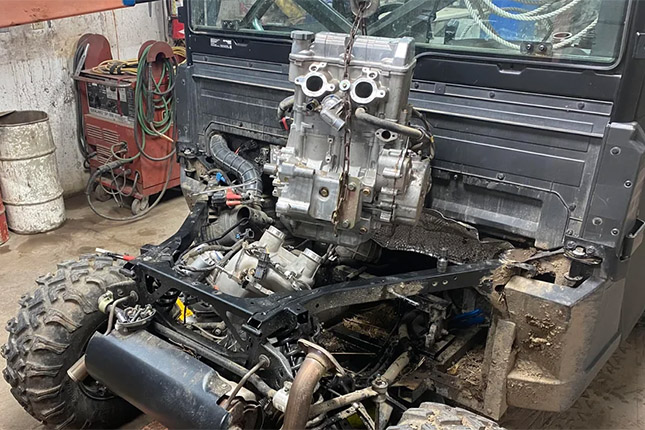
    A maintained ProStar 1000 will run past 3,000 hours. Plenty have. The engine is almost never the reason an RZR gets retired.

    What gets retired is a machine where the belt, the clutches and the cooling system were ignored long enough that the engine finally paid for it.

    Why the engine outlasts everything else

    The ProStar twin is a conventional, well-supported design with overhead cams and fuel injection. Parts are everywhere. Nothing about it is exotic.

    The failure points on an RZR sit around the engine, not inside it. The CVT belt is the first thing to go, the clutches are the second, and the cooling system is the one that turns a cheap problem into an expensive one.

    The three things that actually shorten engine life

    Heat. A radiator packed with mud is the most common cause of real engine damage on this platform. Clean it after mud rides, not at the end of the season. Wash from the engine side outward so you push debris out rather than deeper in.

    Oil intervals. These engines run hot and work hard. Stretching the interval because the machine “only has a few hours on it” ignores that those hours were harder than car hours.

    Belt neglect. A shredded belt does not just leave you stranded. Belt debris gets into the clutches and the cover, and repeated overheating from a slipping belt cooks the clutch and puts heat where it does not belong. The belt cluster on this site exists because this is the single most common expensive failure chain on the platform.

    Big tires, the quiet engine killer

    Oversized tires without a matching clutch kit raise the load at every launch. The belt slips, heat builds, and the drivetrain runs outside what it was designed for on every single ride.

    People blame the belt. The belt is the symptom.

    What high hours look like on a healthy one

    Some oil consumption. A little more valve noise on cold start. Clutch weights and springs due for replacement. None of that is a dying engine.

    Blue smoke, coolant loss with no visible leak, or metal in the oil is a different conversation.

    Related guides

    • What is the best Polaris RZR belt
    • How long do Polaris RZR drive belts last
    • Why do RZR belts break
    • How often should I service my UTV
    • How many hours are a lot on a UTV