Tag: yamaha

  • The List of UTV Manufacturers

    The List of UTV Manufacturers

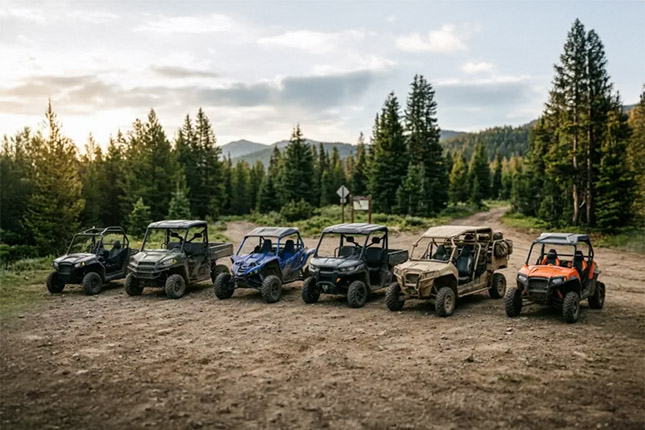
    Twenty-odd companies build side by sides for the North American market. Four of them build most of what you see on a trail.

    The big four

    Polaris. The largest by volume, and the reason the RZR name gets used the way people say Kleenex. Ranger for work, RZR for sport, General for both. Parts availability is the best in the industry, which matters more than any spec sheet when something breaks two hours from the truck.

    Can-Am (BRP). The performance answer to Polaris. Maverick X3 for sport, Defender for work. Can-Am owners tend to be more loyal and more opinionated than any other group in this market. The X3 belt question alone generates more search traffic than most whole brands.

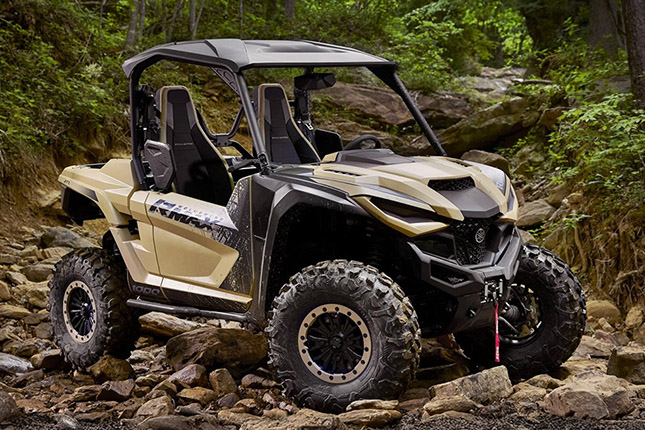
    Yamaha. Builds fewer models and builds them carefully. The Wolverine and YXZ have a reputation for reliability that the sport crowd sometimes reads as conservative. The YXZ is still the only manual-transmission sport machine with a real following.

    Honda. Pioneer and Talon. Same reputation as Yamaha, with a dual-clutch transmission instead of a belt CVT, which sidesteps the single most common UTV failure entirely.

    Work and agricultural

    Kubota. RTV series, diesel, hydrostatic drive, built for farms rather than trails.

    John Deere. Gator, the machine most people picture when they hear “utility vehicle” without knowing the sport side exists.

    Bobcat and Mahindra (Roxor) round out the work end.

    Kawasaki. Mule for work, Teryx for sport. Underrated on both counts.

    Arctic Cat (Textron). Wildcat and Prowler. Smaller presence than it once had.

    The value brands

    CFMOTO, Hisun, Massimo, American LandMaster, Kymco and Segway Powersports compete on price. The machines cost meaningfully less than the big four and the trade is dealer network and parts availability.

    That trade is the whole decision. A cheaper machine is a good deal until a part takes six weeks to arrive.

    Which one should you buy?

    If you are new, buy whatever the nearest dealer supports. Proximity to parts and service beats every spec comparison you will read.

    If you already know you want sport, the real choice is Polaris or Can-Am, and it comes down to which one your riding group runs.

    Related guides

    • The ultimate guide to buying a used UTV for beginners
    • UTV value guide
    • How many hours are a lot on a UTV
    • What is the best Polaris RZR belt
  • Yamaha Side by Side 1000: YXZ1000R and Wolverine RMAX2

    Yamaha Side by Side 1000: YXZ1000R and Wolverine RMAX2

    Yamaha sells two very different 1000cc machines and people shopping the segment routinely confuse them. One is a manual-transmission sport car for the desert. The other is a trail machine built to be comfortable all day.

    YXZ1000R, the one with a real gearbox

    A 998cc three-cylinder with a five-speed sequential manual and an actual clutch. Nothing else in the class does this.

    That gearbox is the entire argument for and against the machine. There is no belt to shred, which removes the single most common UTV failure. In exchange you get a machine that stalls, that demands attention, and that is genuinely tiring in tight technical terrain where a CVT would just creep.

    Buy it if you want to drive. Do not buy it if you want to point and go.

    The Sport Shift version adds paddle shifters and an automated clutch, which softens the worst of the tight-trail problem without removing the gearbox.

    Wolverine RMAX2 1000, the one most people should buy

    A 999cc parallel twin with a CVT, tuned for torque down low rather than peak power. This is the trail machine.

    Yamaha’s suspension tuning is the reason people keep buying these. It rides better on rough two-track than machines with more travel on paper, and the cabin is quieter than the class norm.

    It is slower than an X3 or an XP 1000 and it does not pretend otherwise. The people who like it are not shopping on top speed.

    RMAX2 is the two-seat version. RMAX4 seats four.

    The reliability reputation

    Yamaha’s engines in this class have a strong record, and the brand leans on it in marketing. Two things are worth knowing.

    The RMAX still uses a CVT belt, so it inherits the same belt maintenance reality as every other belt-driven machine. The YXZ genuinely does not.

    Dealer network is smaller than Polaris or Can-Am in most regions. Check what is near you before you commit, because parts proximity matters more than any reliability statistic.

    Related guides

    • The list of UTV manufacturers
    • The ultimate guide to buying a used UTV for beginners
    • UTV value guide
    • How many hours are a lot on a UTV