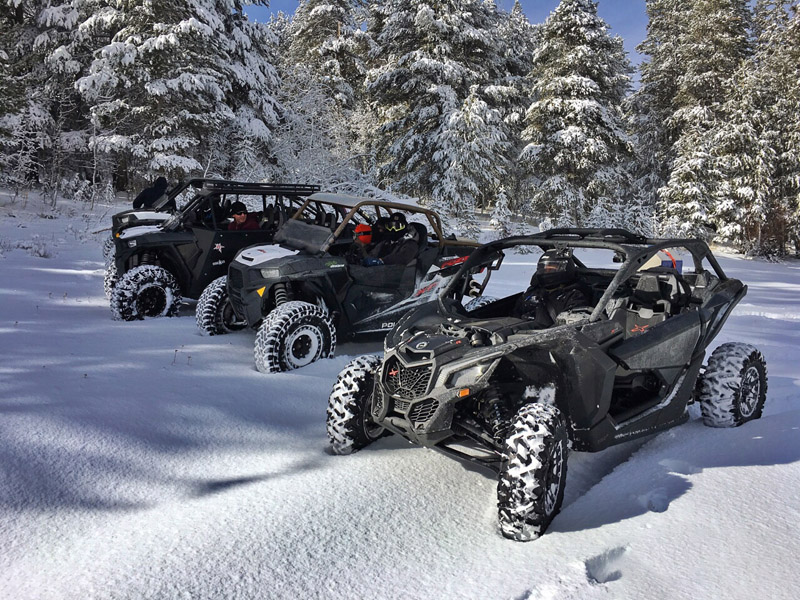
Can-Am may tell you to swap out your X3 belt every 500 miles, but I’m here to tell you that with a bit of careful driving, you can stretch that bad boy to 1500-2000 miles. That’s right, I’m talking about driving with finesse, taking those turns slow and steady, and not gunning it like some kind of maniac. So next time you’re out there on the trail, remember to treat that belt with the respect it deserves, and you’ll be rewarded with many more miles of adventure

When it comes to the Can-Am X3, one question that always seems to be on people’s minds is just how long that drive belt can hold out. Will it last you for hundreds of miles of trail riding, or is it more likely to give out on you just when you’re starting to hit your stride?
Well, my friends, the answer is a bit more complicated than a simple number. You see, there are a lot of factors that can impact the lifespan of your X3 belt, from the kind of terrain you’re traversing to how much horsepower your vehicle is packing.
Buy the right belt with our buying guide on finding your Can-Am X3 belt
Does your X3 drive belt temperature matter?
The primary thing to watch out for is too high of a belt temperature. The high temperatures can slightly melt the belt sides and cause what’s called glassing. You will see a slightly shiny area on the side of your belt.
Understanding the Role of the CVT Belt in Your Can-Am X3
The CVT belt, often referred to as the drive belt, is the unsung hero of your Can-Am X3. It transfers power from the engine to the wheels, ensuring smooth and efficient performance. However, like any other component, it requires regular maintenance and care to function optimally.
The Importance of Regular Belt Maintenance
Regular belt maintenance is not just about ensuring your Can-Am X3 runs smoothly. It’s about preventing unexpected breakdowns during your off-road adventures. A well-maintained CVT belt can withstand the rigors of rock crawling, dune bashing, and other extreme off-road conditions.
Preventing Belt Failure: The Key to Longevity
Belt failure is a common issue among Can-Am X3 owners. However, it can be prevented with regular inspections, proper installation, and an understanding of the signs of wear and tear. By keeping an eye on the belt temperature and changing the belt at the right time, you can prevent catastrophic belt failure.
Is Can-Am X3 clutch alignment important to belt life?
You bet it is, clutch alignment should be maintained although it is fine coming from the factory. If you are constantly experiencing belt tears you should check the alignment between the primary and secondary clutch and make sure your belt is riding in the center of the two clutches.
It’s important to keep in mind, too, that regular inspection and maintenance can go a long way toward extending the lifespan of your drive belt. Keep an eye out for any signs of wear and tear, such as fraying or cracking, and make sure to address any issues promptly.
In the end, the longevity of your Can-Am X3 belt will depend on a variety of factors, some within your control and others not so much. But with careful attention and a bit of luck, you should be able to get plenty of miles out of your trusty drive belt, whether you’re racing through the wilds or just puttering around the farm.
Making Your Belt Last Longer: Tips and Tricks
Making your belt last longer is not rocket science. It’s about understanding your vehicle, adapting your driving style, and following a set maintenance routine. Here are some tips to help you extend the life of your CVT belt:
- Proper Break-In: A new drive belt requires a proper break-in period. This involves achieving a high number of flex cycles under low load while maintaining low temperatures. This process allows the belt to wear and mate to the proper angle of the sheaves, ensuring optimal performance.
- Avoid High Speeds: High speeds can lead to excessive heat, causing the belt to wear out faster. During the break-in period, avoid wide open throttle and high speeds to ensure the longevity of your belt.
- Use Low Gear: When tackling steep inclines or heavy loads, use low gear. This reduces the strain on the belt and prevents overheating.
- Regular Inspection: Regularly inspect your belt for signs of wear and tear. Look for cracks, fraying, or any signs of damage. If you notice any issues, replace the belt immediately.
- Keep It Clean: Dust and debris can cause premature wear and tear on your belt. Regularly clean the belt and the clutch housing to keep them in optimal condition.
- Monitor Belt Temperature: Overheating is a common cause of belt failure. Consider installing a belt temperature sensor to monitor the belt’s temperature and prevent overheating.
Hunterworks – The Best Polaris RZR Belt

Hunterworks CVT Drive Belt
- Engineered for Toughness and Strength
- Designed to withstand intense stress while maintaining peak efficiency and longevity
- Proprietary construction
$159.00 at time of publishing
First and foremost, the Hunterworks belt is made in the USA, which is a big selling point for me as it ensures high-quality craftsmanship. The Hunterworks team boasts an impressive 20 years of clutching experience, and it clearly shows in this product. The proprietary construction of this belt is engineered for toughness and strength, making it suitable for even the most demanding off-road conditions.
Installation was a breeze, and it fit my 2016 Polaris RZR XP 1000 perfectly. The compatibility range for this belt is quite extensive, spanning from 2014 to 2023 Polaris RZR XP 1000 and XP 4 models, including the Highlifter edition. This wide range of compatibility makes it a versatile choice for a broad spectrum of Polaris RZR owners. See our full step-by-step guide for replacing your RZR belt.
What truly sets the Hunterworks CVT Belt apart is its exceptional reliability. With over 50,000 belts sold and a failure rate of less than 1%, it’s clear that this product is built to last. I rely on my RZR for rugged adventures, and knowing that I have a reliable CVT belt gives me peace of mind on the trails.
Additionally, the price point of $159.00 is competitive, especially considering the quality and durability of this belt.
GBoost Worlds Best Belt

GBoost Worlds Best Belt
- Highest shock load rating to date
- Increased top cog pressure load design
- Bottom cog uses HIGH MODULOUS RUBBER COMPOUND
$159.99 at time of publishing
The GBOOST Race Belt is a game-changer. Designed to replace the OEM belt #3211202, this belt is built to withstand the demands of extreme racing and intense side-by-side adventures. The GBOOST Technology Race Belt is engineered to minimize the chances of snapping or delamination, ensuring reliable power transmission to the wheels. With its robust construction, this belt is built to withstand the rigors of high-performance racing and extreme off-road conditions.
This race belt is not just about strength and durability; it also delivers exceptional performance. The bottom cog of the belt utilizes a high-modulus rubber compound (BZX1), which offers superior heat resistance and dissipation. Short Aramid Fibers are impregnated into the belt for enhanced belt-to-sheave adhesion and reduced overall belt temperature. The precision ground sidewall angle ensures smooth engagement, increased power transfer, and lower operating belt temperature. Additionally, the Kevlar cord, wrapping over the bottom cogs, provides increased bottom cog strength and improved cord pop-out resistance. This belt is engineered to optimize rotational efficiency at full shift, delivering maximum power to your Polaris RZR..
GBOOST Technology offers a warranty and customer support to providing you with peace of mind and assistance if needed. When it comes to maximizing the power and performance of your Polaris RZR, the GBOOST Race Belt is the ultimate choice. SuperATV Heavy Duty Extreme Bad Ass Drive Belt
Polaris RZR OEM Belts

OEM Polaris Drive Belt
- OEM Drive Belt: Polaris Drive Belt
- OEM Performance
- High Strength
$169.99 at time of publishing
We recommend using the OEM belts. How can you go wrong with a Polaris OEM Belt? They offer easy installation and lasting power. These babies are the real deal, built for all terrains and tested to the max by the folks over at Polaris.
These OEM parts are designed to run cooler and at optimal RPMs, ensuring maximum performance and durability out on the road. They’ve been put through 20,000 miles of field testing and over 18 months of development, so you know they’re the real deal.
They can handle anything you throw at ’em – mud, dirt, trails, sand, rocks, you name it. And they’re sturdy and reliable, built to last under the power of the RZR. They’re engineered to run at the optimal RPM and deliver unmatched performance for your off-road vehicle.
And the best part? These belts are easy to install, with just three easy steps. You don’t need to be a rocket scientist to get these babies on your ride. Just use a clutch removal tool, remove the old belt, and replace it with the new one. Boom, you’re good to go.
Now, I know what you’re thinking – what about compatibility? Well, Polaris has got you covered. OEM belts are made to just fit and take the hassle out of figuring out if you have the right belt.
Now, I know what you’re thinking. You read that one review, didn’t you? Where some poor sap buys the belt, installs it, drives two miles, and burns the belt. But let me tell you, that’s just a fluke. That’s why it’s important to buy from a seller who’s got your back. And with this belt, you’re covered. So, let me sum it up for you. You want a drive belt that fits like a glove on a whole lot of RZRs? You want a belt that won’t let you down and a seller who’s got your back? You want this belt and you want it now.
Kemimoto Polaris RZR Drive Belt

KEMIMOTO Heavy Duty Carbon Drive Belt
- Strong heat dissipation
- Durable three-layer-thick
- Precise tooth pitch design and Uniform wear
$59.99 at time of publishing
The KEMIMOTO Drive Belt, an UTV heavy-duty carbon belt compatible with various Polaris models. The belt is made of high-quality chloroprene rubber and aramid string cord, providing heat resistance and dissipation. It offers puncture resistance, abrasion resistance, and corrosion resistance, ensuring durability and preventing excessive deformation. The belt’s precise occlusal spacing design promotes even stress distribution, reducing unilateral wear and extending its lifespan. It also has minimal stretch under load, offering stable variable speed RPM even in demanding conditions.
The product has received a rating of 4.4 out of 5 stars from 359 customer reviews. Customers have praised the belt’s sturdy construction, stating that it fits their Polaris vehicles well. Some have mentioned that the belt provides improved performance, such as better acceleration and power transfer. The quick installation process has also been appreciated. However, a few customers have expressed concerns about the tight fitment and mentioned that the belt can be challenging to install. Overall, the product has received positive feedback regarding its quality and compatibility with various Polaris models.
By following these tips, you can ensure that your CVT belt will last a set number of miles, providing you with reliable performance during your off-road adventures.
Related Questions About Can-Am X3 Drive Belts
Can I Replace a Can-Am Drive Belt Myself?
Yes, you can it ain’t rocket surgery. You can swap out a Can-Am drive belt yourself. No need to fork over your hard-earned cash to a mechanic. Just grab your tools and get to work.
How Do I Know My Can-Am X3 CVT Belt Is Worn?
One of the most common injuries that X3 riders face is a worn-out drive belt. You check for glassy sides of the belts. Also, sluggish acceleration or jumping suddenly can be a sign of a worn belt
How Long do Can-Am X3 drive belts last?
When it comes to the Can-Am X3, one question that always seems to be on people’s minds is just how long that drive belt can hold out. Will it last you for hundreds of miles of trail riding, or is it more likely to give out on you just when you’re starting to hit your stride?
Why do X3 belts break?
X3 belt breakage can be attributed to several reasons, including overloading, harsh riding conditions, poor maintenance, or manufacturing defects. Overloading the vehicle or carrying excessive weight can strain the belt, causing it to fail. Similarly, riding in harsh conditions like extreme heat or dust can accelerate belt wear and reduce its lifespan. Lack of maintenance, such as not keeping the belt clean or ignoring signs of wear, can also lead to belt breakage. In rare cases, manufacturing defects may cause premature belt failure.
What does a failing drive belt sound like?
X3 belt breakage is a problem that can have several culprits. It could be due to overloading the vehicle with too much weight or putting it through the wringer in harsh riding conditions. Riding in extreme heat or thick clouds of dust can speed up the wear and tear on the belt, causing it to fail sooner. Neglecting to keep the belt clean or ignoring warning signs of wear and tear can also lead to breakage. And, in some rare instances, defects in the manufacturing process may cause the belt to fail before its time.
How do you break in a new X3 belt?
If you want to keep that X3 of yours runnin’ smooth and strong, you gotta give that belt the break-in it deserves. Don’t go slammin’ down the pedal and expect everything to work like a charm. No, sir. Take it easy for the first 5 to 10 miles, keep it in low gear if you got it, and vary them speeds. If you ain’t got low gear, take it moderate for 50 miles. And don’t forget, it ain’t just about the miles. Keep them engine RPMs low and steady, and you’ll be good to go.
Why do my belts keep ripping?
Why do my Can-Am drive belts keep ripping? Well, it could be due to overloading the vehicle or carrying too much weight, harsh riding conditions such as extreme heat or dust, poor maintenance, or even manufacturing defects. Take good care of your belt and avoid straining it, and you’ll have fewer problems.
How much does it cost to get a drive belt replaced?
If you’re handy enough, you can replace your X3 drive belt for less than two hundred bucks. Just grab a new belt for around 150 and some tools, if you don’t already have some, for 30 bucks, and you’re good to go.
Should you wash a Can-Am CVT belt?
Washing a new drive belt before installation is a hotly debated topic. But if you insist on giving it a bath, use warm, soapy water and let it air dry before you slap it on.
Are Can-Am X3 belts directional?
New belts don’t give a damn about direction, but used ones sure do. Directional arrows on some belts are just a reminder to put it back on the same way if you ever take it off. To prolong your belt’s life, it’s wise to always run it in the same direction.
Can you drive with a worn Can-Am drive belt?
Can you drive with a worn Can-Am drive belt? Well, you can, but it’s like walking around with a ticking time bomb in your pocket. You never know when it’s going to go off and leave you stranded in the middle of nowhere. So, if you value your time and sanity, it’s best to replace that worn belt before it’s too late.
What happens if you don’t change your Can-Am drive belt?
Well, friend, if you don’t change your Can-Am drive belt, you’ll eventually find yourself stranded in the middle of nowhere with a busted belt and a sour mood. A worn-out belt can break unexpectedly, leaving you high and dry on the trail or in the field. Not to mention, a damaged belt can cause other issues with your vehicle’s performance, leading to costly repairs down the road. So, don’t be a fool – keep that drive belt fresh and enjoy your ride without any unnecessary headaches.
Will a broken Can-Am drive belt destroy my engine?
No, it won’t destroy your engine. The rev limiter will kick in and you may get a light on your dash. Just shut her down and clean out the old drive belt and replace it with a new belt. Disconnect the battery to clear the dash light then reconnect it and get on with your day.
Can you spray wd40 on X3 belt?
Don’t do that WD40 is a lubricant and your UTVs drive belt works with friction applied to the belt. A lubricant reduces friction and would defeat the purpose of the belt.